Relevance algorithms are essential, but commerce merchandisers need fine-grained control over product positioning during promotional campaigns, vendor sponsorship deals, and inventory clearouts. Blending autonomous semantic ranking with visual merchant controls unlocks an average 18% conversion lift.
1. Visual Drag-and-Drop SKU Slotting
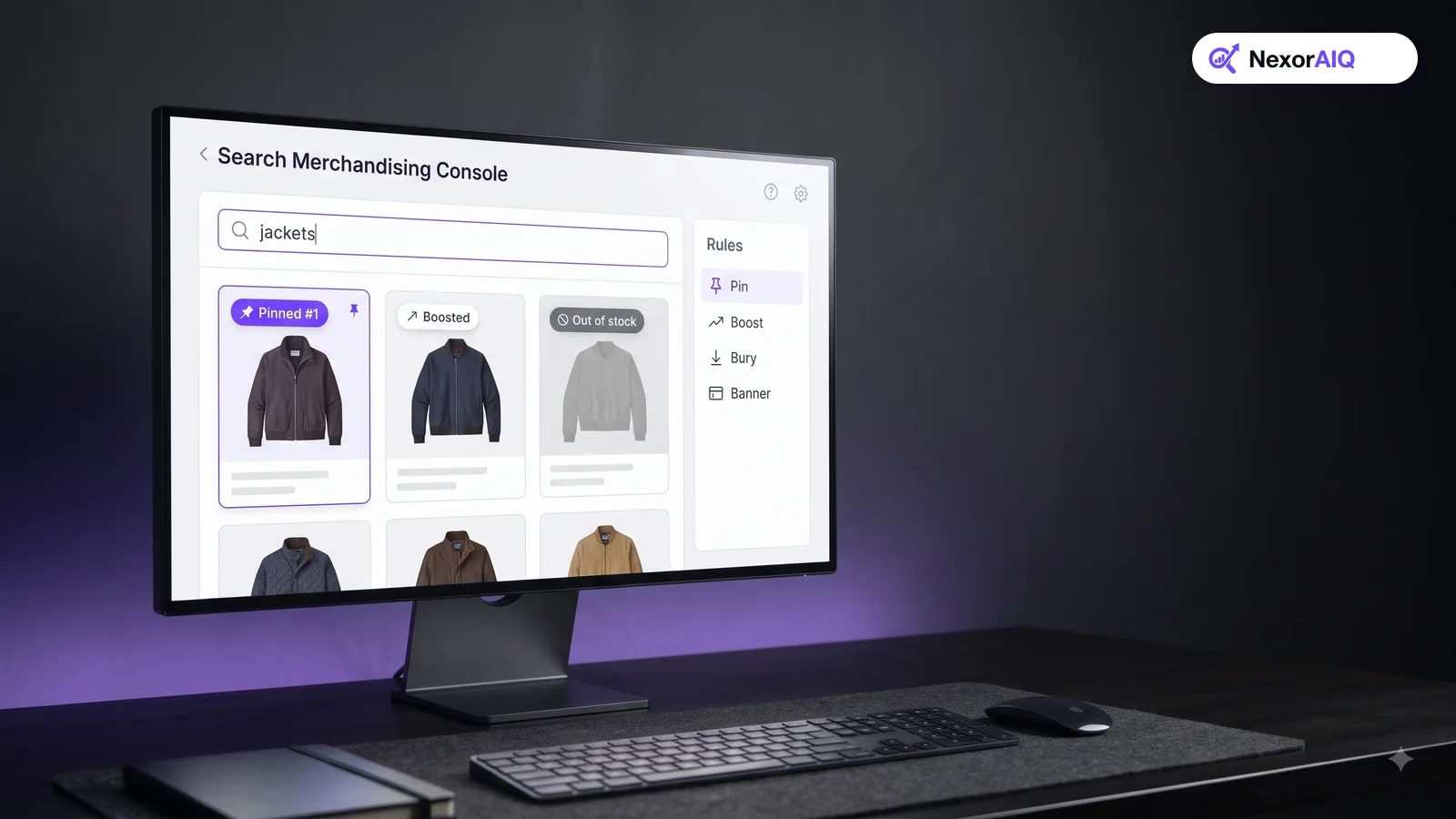
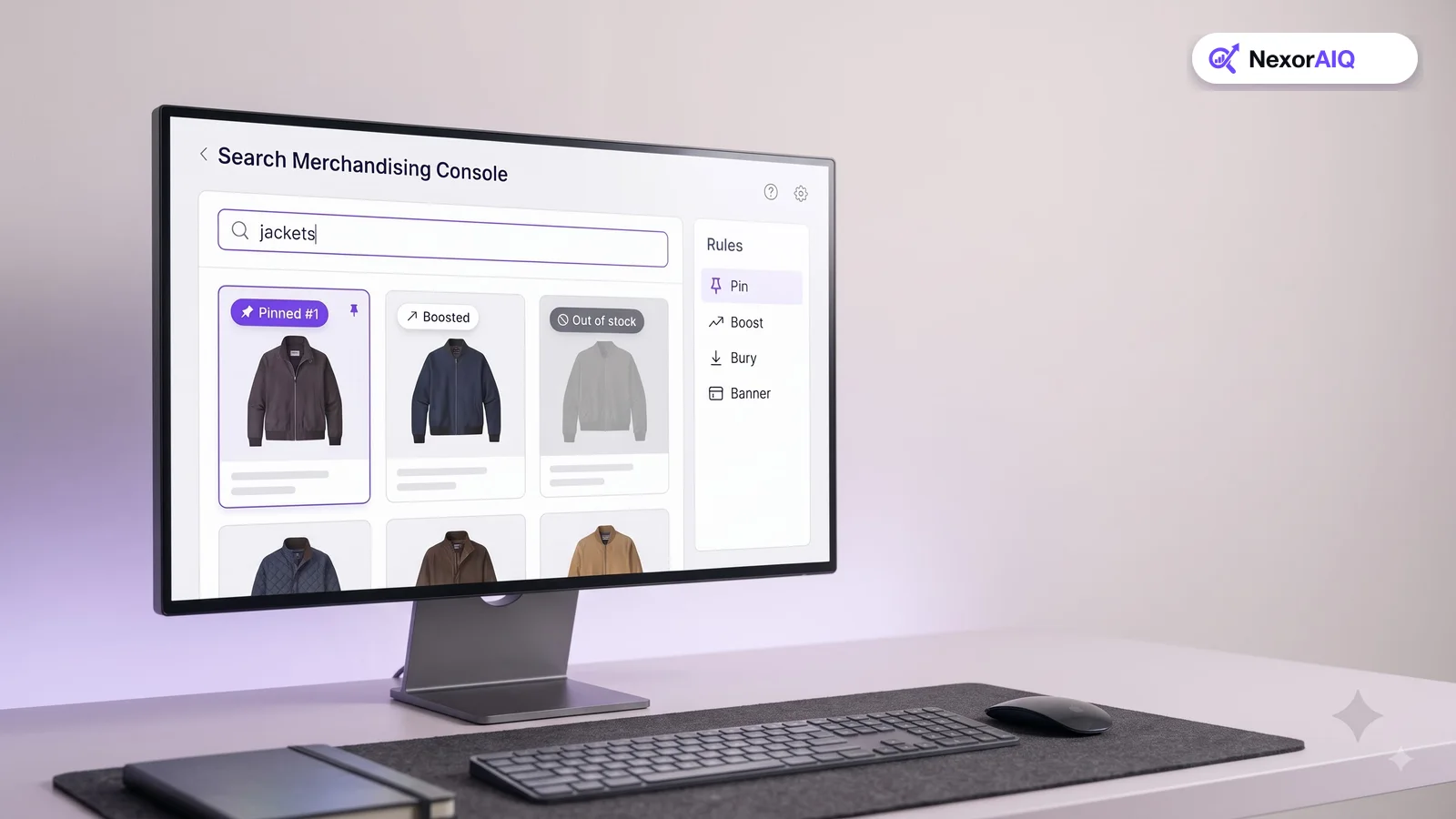
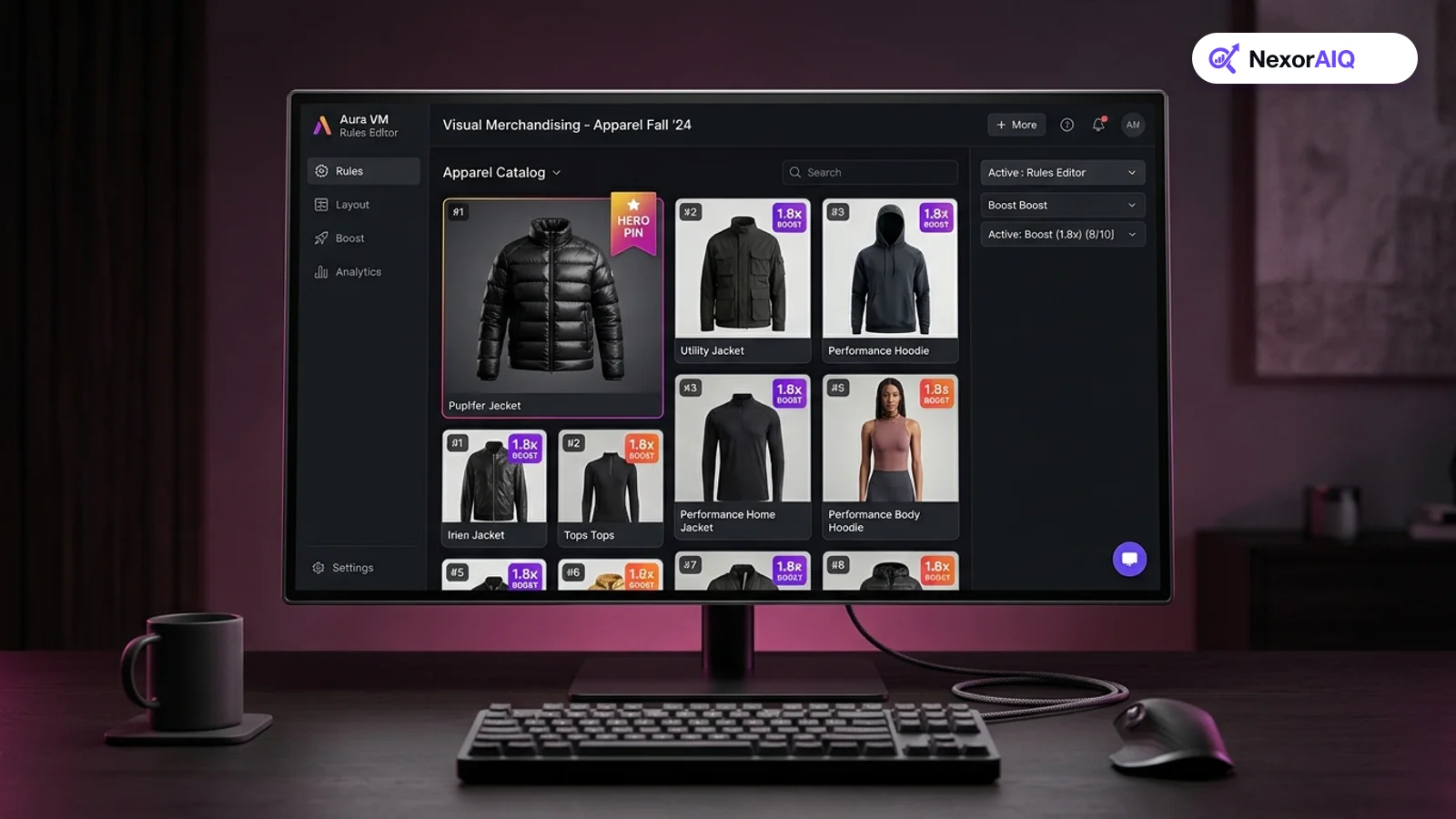
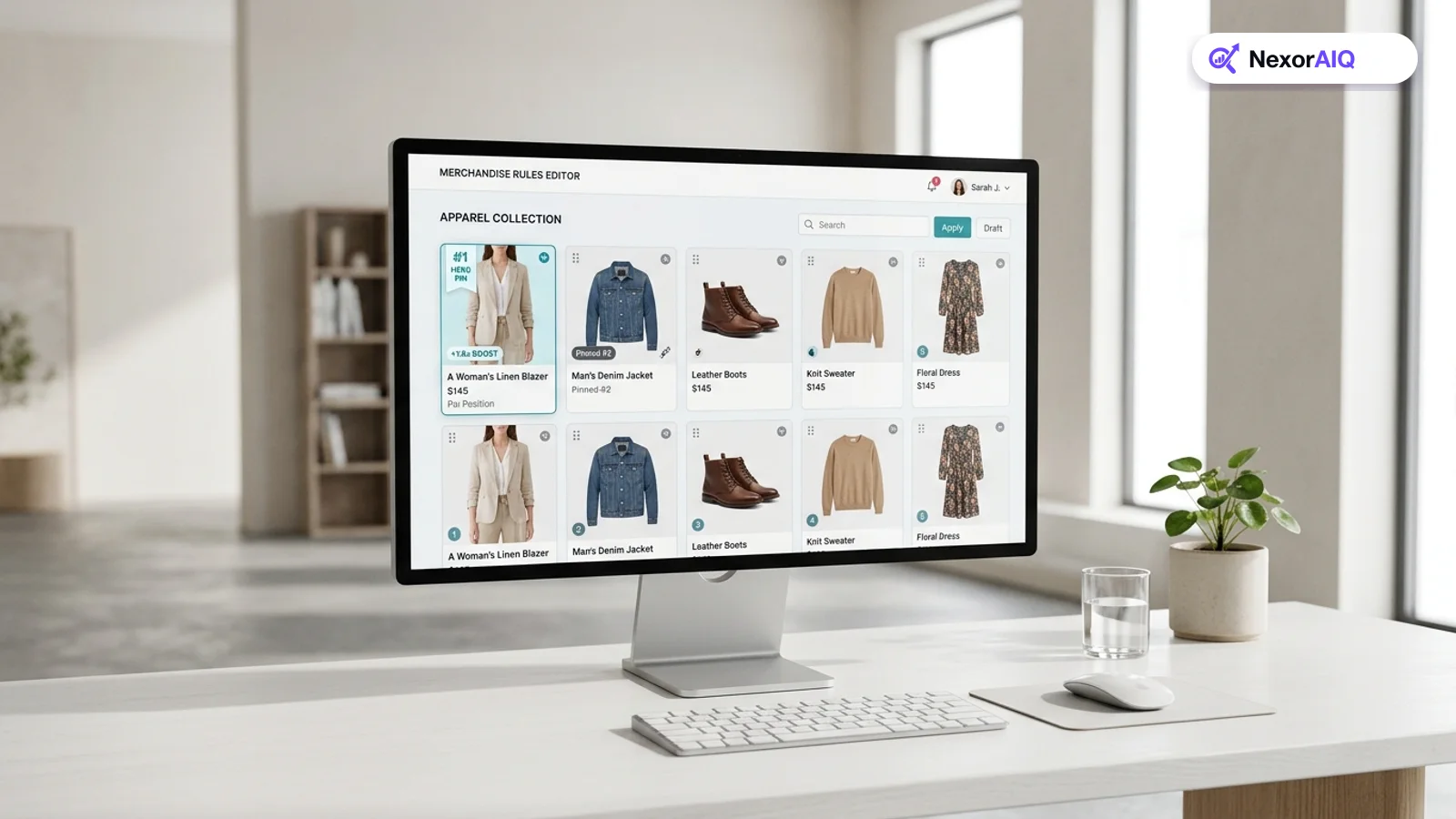
NexorAIQ empowers non-technical merchandising teams to visually pin high-margin SKUs to positions #1 and #2 while allowing the AI relevance algorithm to organically rank the remaining inventory. Merchandisers can visually inspect desktop and mobile grids side-by-side, simulating exact customer query results across distinct store views.
2. Dynamic Margin & Inventory Multipliers
Automatically boost products with high stock levels or higher profit margins without manual spreadsheet exports. When inventory drops below safety thresholds (such as 3 units), the system dynamically demotes the item to prevent overselling while keeping search results fresh and highly actionable.
3. Scheduled Query-Triggered Promotional Banners
Trigger high-converting responsive promotional banners when shoppers search for specific query triggers like 'summer collection' or 'holiday gift guide'. These in-grid promotional units integrate directly into product cards, driving click-through rates without disrupting user browsing flow.
4. Geo-Targeted & Anonymous Personalization Rules
Adapt product ranking based on the shopper's physical location and real-time session intent. Shoppers browsing from cold climates see seasonal apparel prioritized over summer wear, while anonymous shoppers with active session affinities receive personalized collection ordering from their very first interaction.
5. Statistical A/B Testing & Governance
Never guess whether a merchandising rule actually helps revenue. NexorAIQ includes native Bayesian A/B split testing for every boost and pinning rule, measuring conversion rate, average order value (AOV), and total gross profit against algorithmic baselines.
Frequently Asked Questions & Architecture Insights
How do visual merchandising rules interact with AI vector ranking?
Visual merchandising rules apply mathematical multipliers and absolute slot overrides on top of raw cosine similarity scores, ensuring business requirements are respected without degrading natural semantic relevance.
Can merchandising campaigns be scheduled in advance for flash sales?
Yes. Every pinning rule, boost multiplier, and promotional banner supports automated start and expiration timestamps with sub-minute synchronization across edge endpoints.
What happens if a pinned product runs out of stock?
NexorAIQ includes automated fallback protection: if a pinned SKU drops to zero inventory, the system gracefully releases the slot to the next highest-scoring in-stock item.
Key Takeaway
Combining automated AI relevance with visual merchandising rules gives brand teams the perfect balance of algorithmic speed, merchant creativity, and revenue optimization across all commercial search touchpoints.