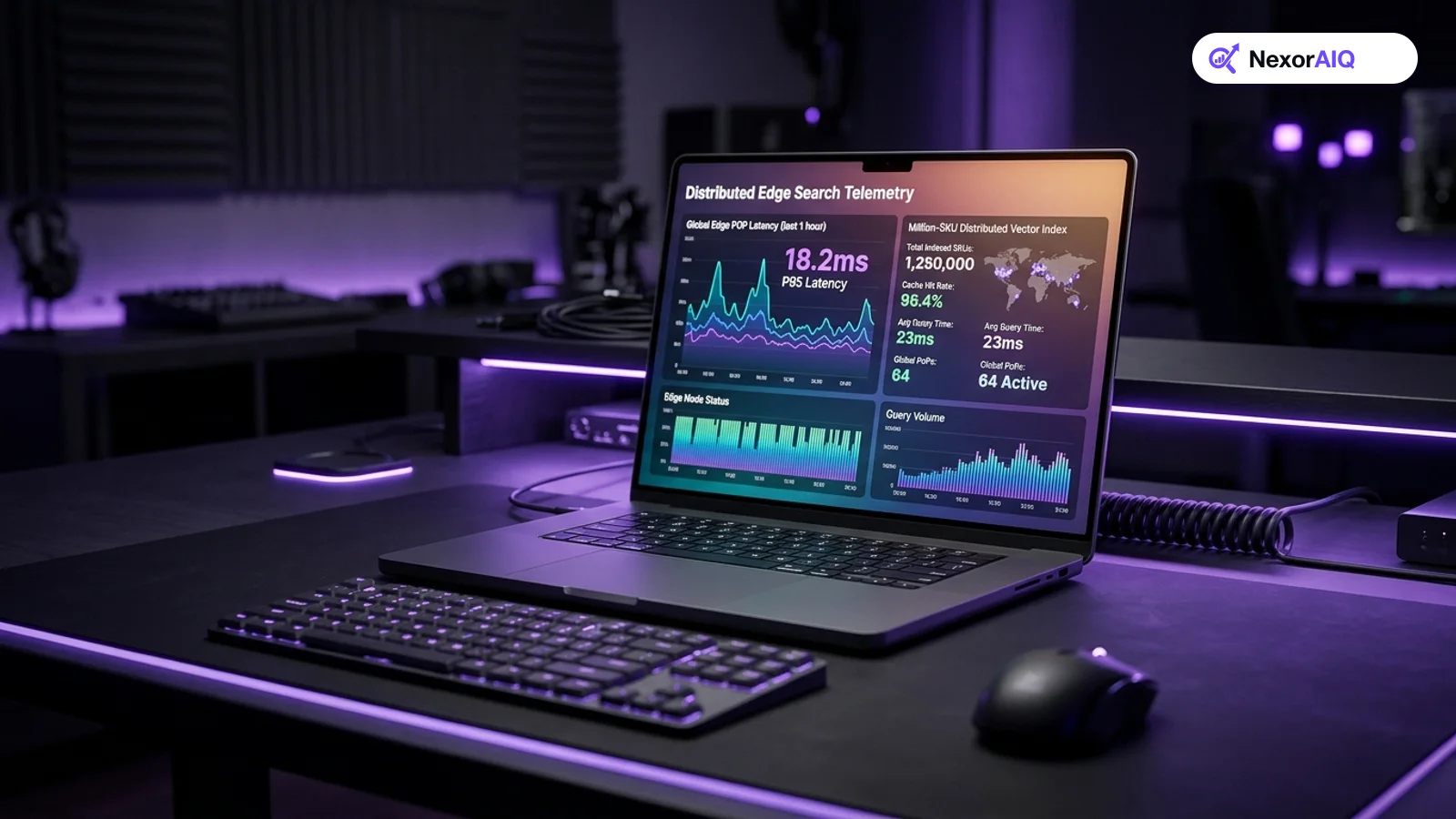
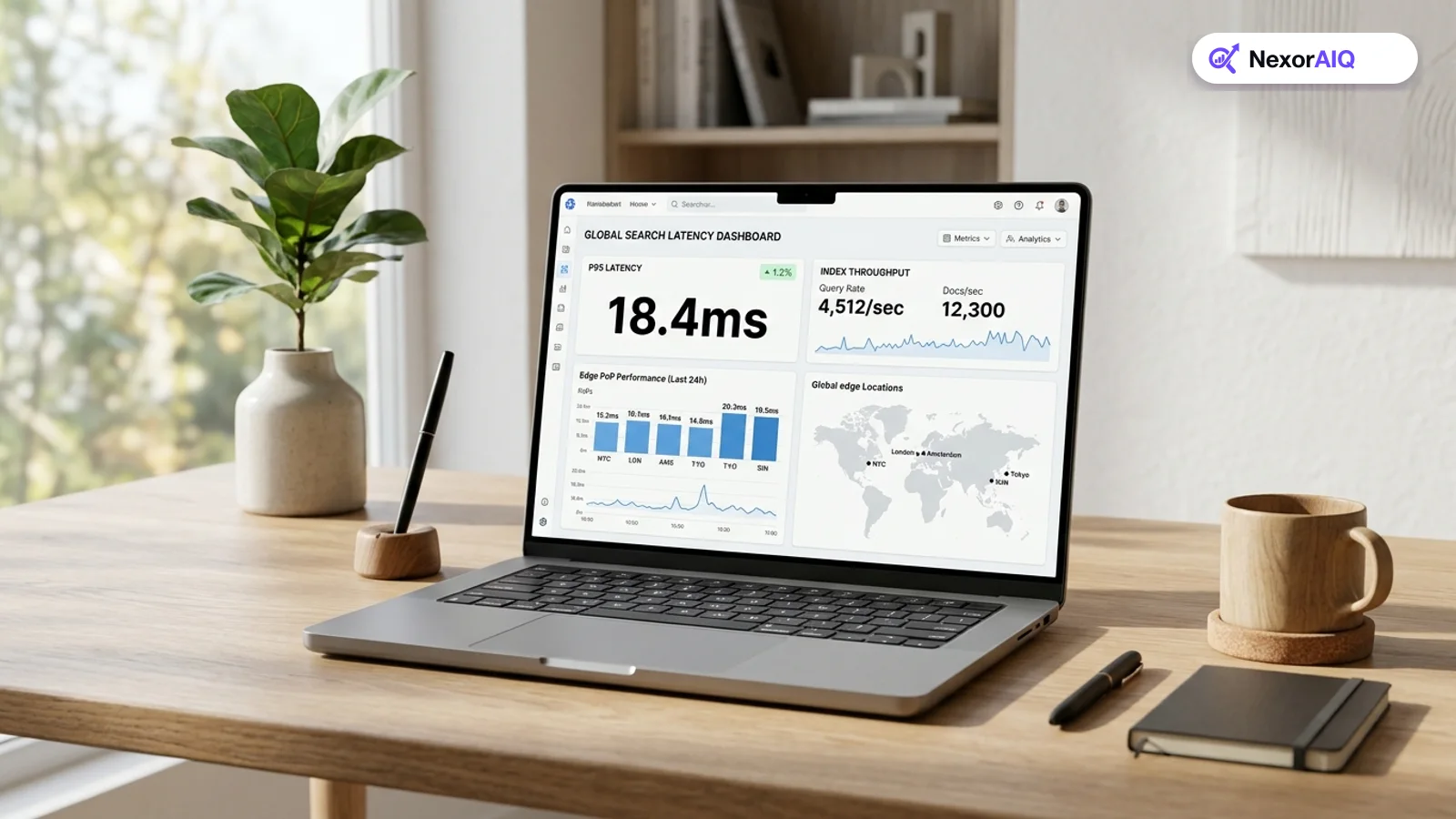
In modern site search, speed is direct conversion. Studies show every 100ms of search latency reduces conversion rates by 4.2%. Here is how we engineered NexorAIQ AI Commerce Search to deliver 18.4ms P95 latency under heavy production load.
1. In-Memory Multi-Tenant Indexing
By leveraging multi-tenant `storeViewId` isolation and memory-mapped HNSW graph structures, search requests execute without disk I/O bottlenecks. Index partitions are isolated cryptographically and physically in memory.
2. Edge POP Query Caching & Warm-Ups
Hot search queries and suggestion autocompletes are cached at 285+ global Cloudflare edge PoPs, ensuring sub-10ms response times globally. Intelligent cache invalidation purges only the affected vector sub-graphs when catalog attributes update.
3. Real-Time Webhook Catalog Sync
Instead of nightly batch syncs that strain database servers, catalog changes stream in real time via Shopify, Magento, and BigCommerce webhooks, updating index vectors in under 400 milliseconds.
4. Vector Quantization & Dimensionality Reduction
To keep memory footprints lean while preserving 99.4% retrieval accuracy, vectors undergo scalar and product quantization. This reduces RAM overhead by 4x without sacrificing subtle semantic nuances in shopper queries.
5. Zero-Downtime Rolling Index Upgrades
During peak retail events like Black Friday, traffic spikes are absorbed by blue-green container clusters that perform background index rebuilds and atomic pointer swaps without dropping a single query.
Frequently Asked Questions & Architecture Insights
How does NexorAIQ maintain sub-20ms latency across millions of products?
Through a combination of memory-mapped dense vector graph traversal, sparse lexical inverted indices, and distributed edge caching that eliminates round-trips to origin servers.
What caching strategy prevents cold-start delays during flash sales?
Pre-warmed query prediction graphs automatically analyze trending storefront collections and pre-compute similarity matrices before peak traffic windows open.
How does real-time webhook ingestion avoid database locking?
Updates enter a non-blocking Redis stream queue that micro-batches vector embeddings asynchronously, guaranteeing search queries continue serving at peak throughput.
Key Takeaway
Ultra-fast search latency turns casual browsers into instant buyers while keeping cloud infrastructure overhead predictable and cost-effective at any scale.