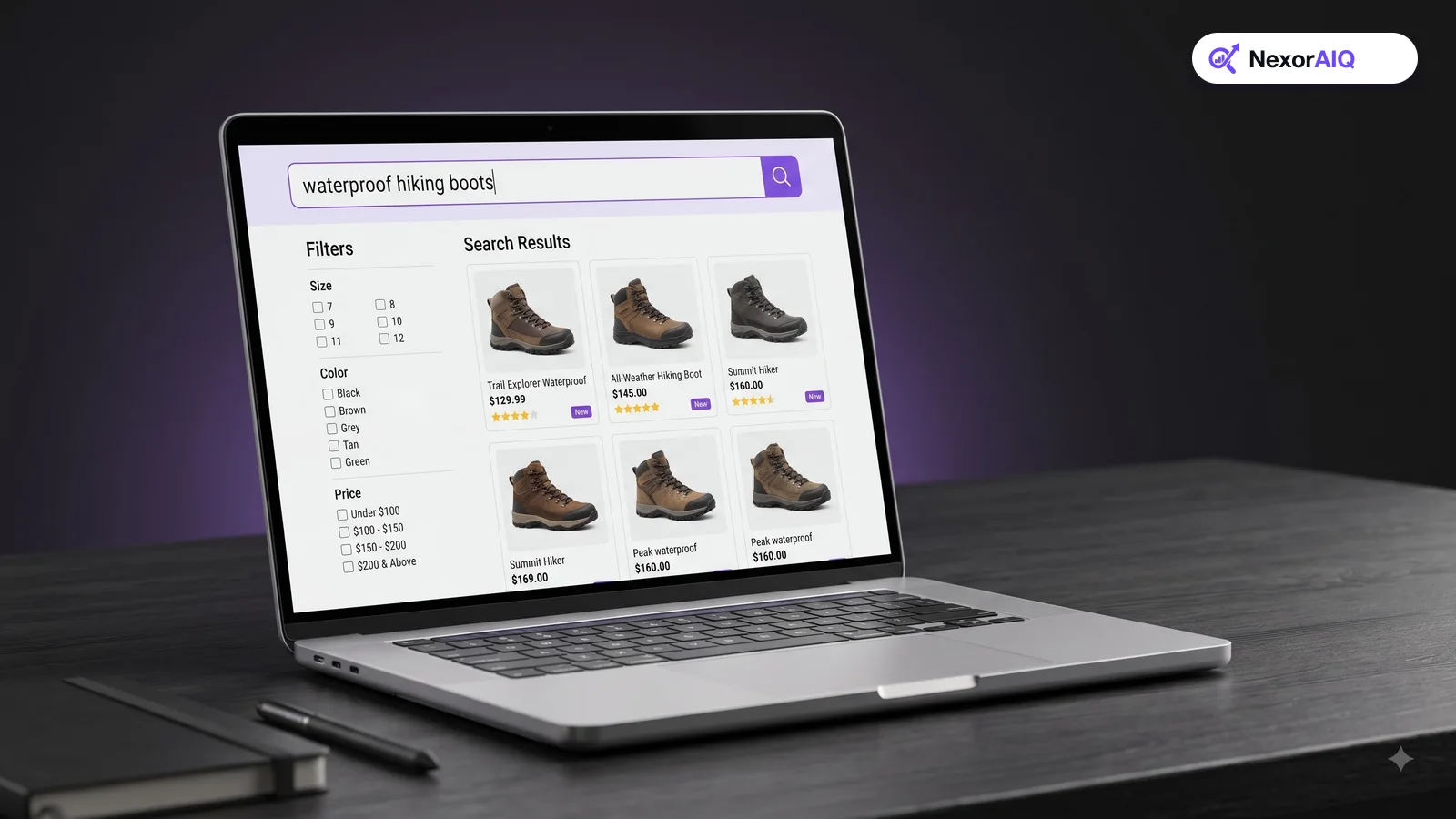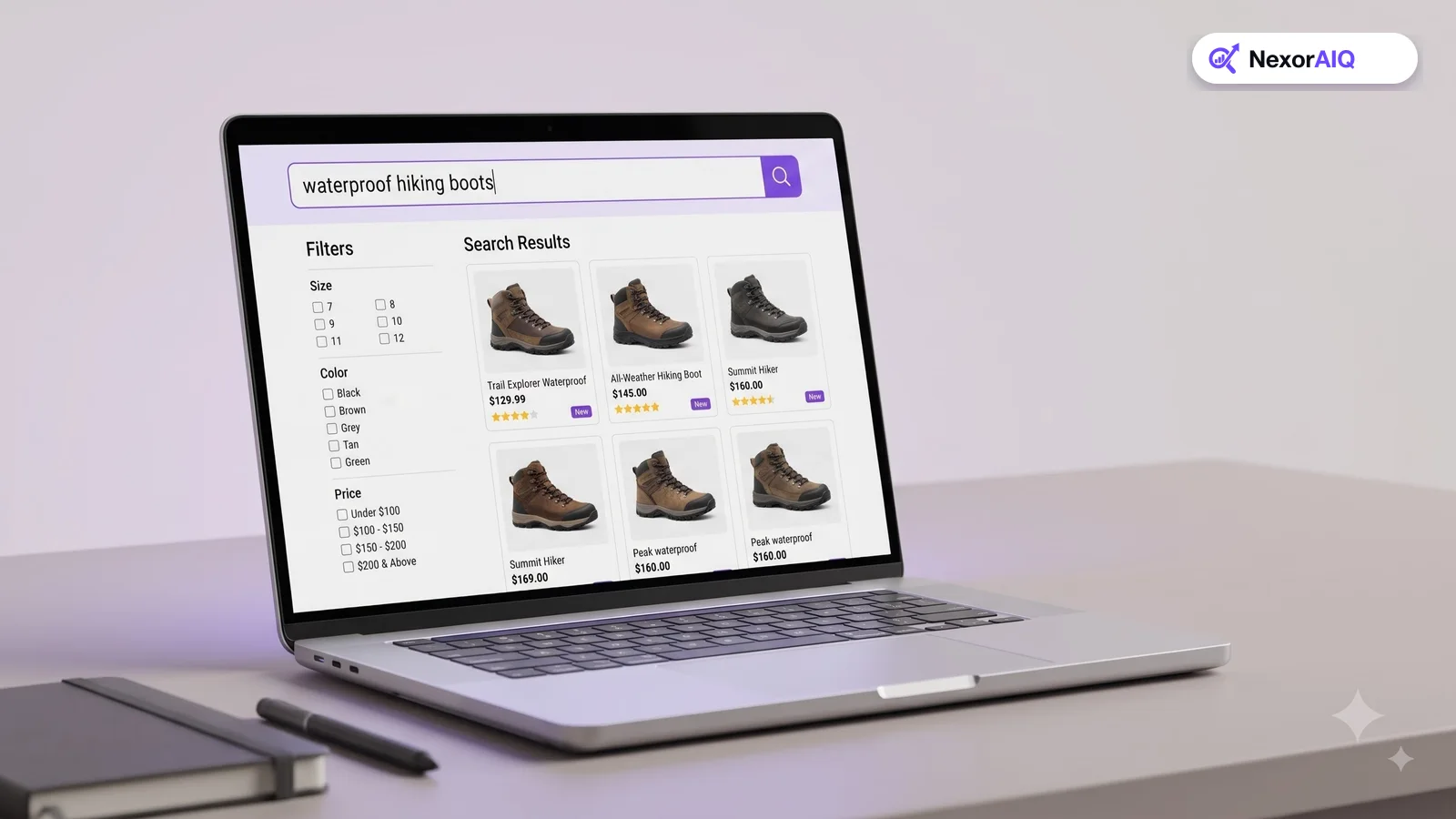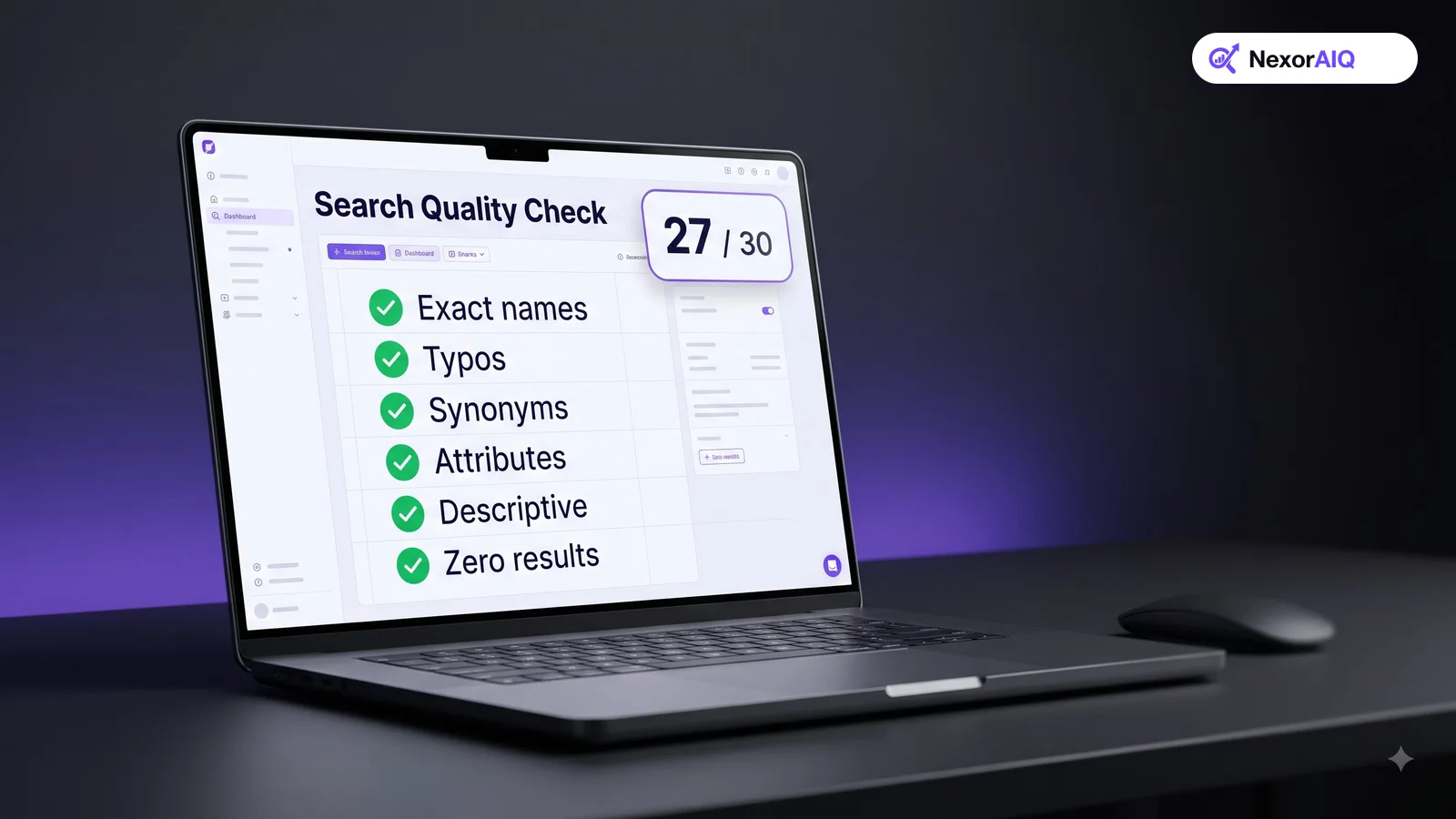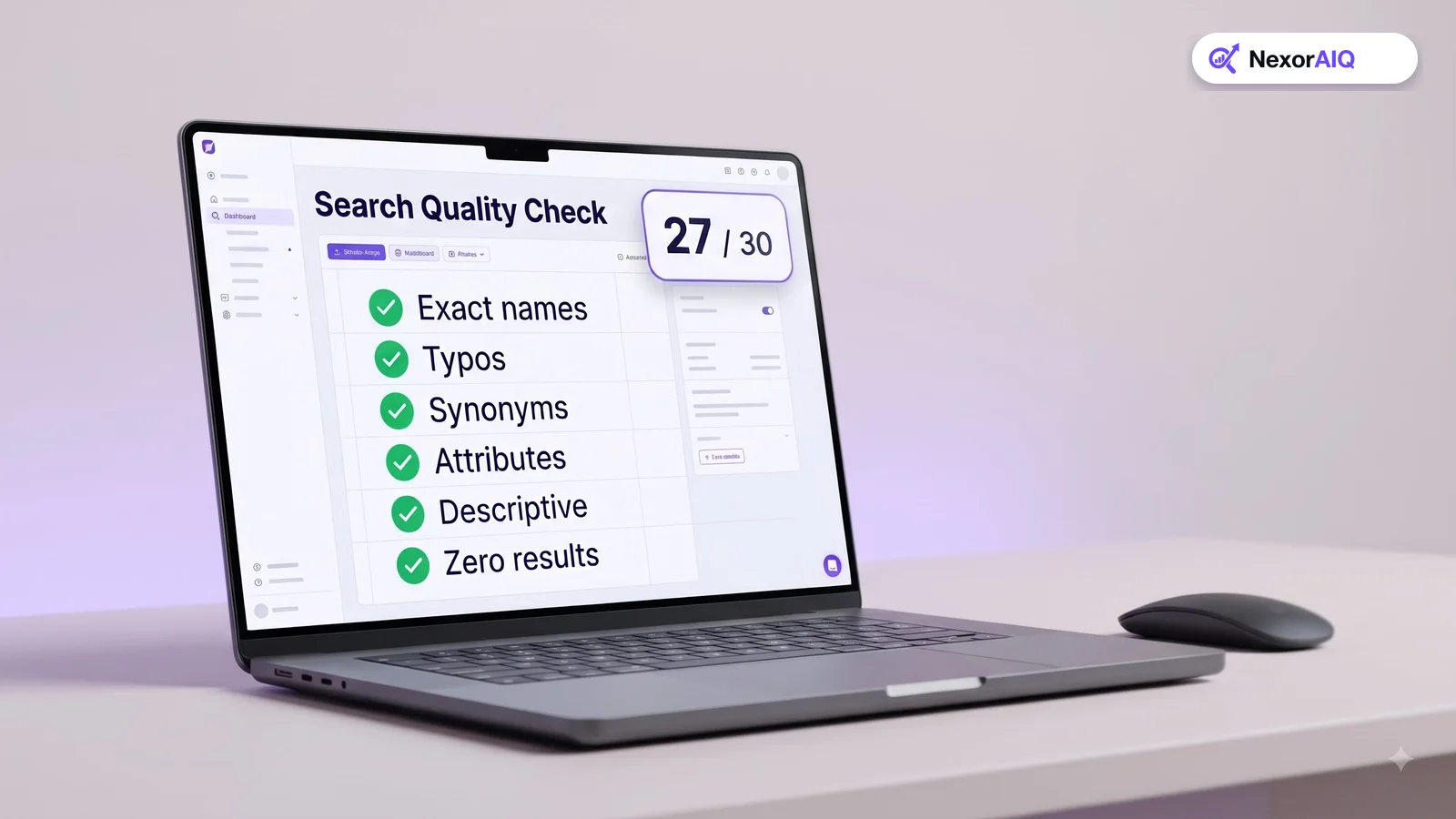
When a shopper searches for "linen shirt" and your linen shirt doesn't appear, the search engine usually isn't the problem. The product record never says "linen". It might be in the photo, or in a supplier PDF, but not in a field search can read. No ranking algorithm can find a word that isn't there. This guide covers which product data matters most for search, how to find the gaps in your catalog, and how to fill them without rewriting every product by hand.
Why product data decides search quality
Every part of search depends on product data:
- Matching needs the words shoppers use to appear in titles, attributes or descriptions.
- Filters need structured attributes. You can't offer a "Material" filter if half your products have no material recorded.
- Ranking needs signals such as category, stock and price to be correct.
- Autocomplete suggests from your catalog vocabulary, so gaps there become gaps in suggestions.
Poor data also costs money after the sale. In Syndigo's shopper research, 26% of respondents said they had returned a product in the past six months because it didn't match the expectations set by its product information.
The attributes that matter most for search
You don't need every possible attribute. Start with the ones shoppers actually type and filter by:
- Product type: the plain-language name for what it is ("sofa", "running shoe", "cordless drill").
- Brand.
- Color, material and size, recorded as separate fields, not only in the title.
- Key specs for technical products: capacity, wattage, dimensions, compatibility.
- Use case or occasion: "hiking", "office", "wedding", "outdoor".
- Audience: men, women, kids, pets.
Your search log tells you which of these matter in your store. If shoppers often type "cotton" or "for kids", those attributes need to be complete.
Audit your catalog in an afternoon
Export your catalog to a spreadsheet and check three things:
- Fill rate: for each important attribute, what share of products has a value? Anything under 80% for a filterable attribute is a problem.
- Consistency: the same value written different ways ("Navy", "navy blue", "Dark Blue") splits filters and confuses matching. Count the distinct values per attribute and merge duplicates.
- Search failures: take your top 50 zero-result and low-click queries and check whether matching products exist. If they do, the data is missing the shopper's word.
The third check is the most useful, because it ties data work directly to lost searches. Our zero-result recovery guide explains how to pull those queries.
Write product titles for people and search
The title is the strongest text signal in most search engines, so it deserves care. A reliable pattern is:
Brand + product type + key attribute + variant detail, for example "Northpeak Waterproof Hiking Jacket, Men's, Navy".
- Put the product type in plain words. "The Explorer" tells search nothing; "Explorer Waterproof Jacket" does.
- Keep titles readable. Don't stuff them with every synonym; use synonyms in your search dictionary instead.
- Keep the format consistent within a category so results look tidy and comparable.
Normalize values so filters work
Filters are only as good as the values behind them. Agree on a fixed list of values for each filterable attribute and map everything to it:
- Colors: map shades to a base color ("Navy" → Blue) while keeping the exact shade for display.
- Sizes: use one system per category and convert the rest.
- Units: store measurements in one unit and format them for display.
- Yes/no attributes such as "waterproof" should be true or false, not free text.
This is dull work, but it pays off twice: better filters and better matching. Our faceted search best practices show how clean attributes turn into useful filters.
Use AI to fill the gaps, then review
Large catalogs can't be enriched by hand. AI can help in three ways:
- Extract attributes from text you already have, such as descriptions and supplier sheets.
- Read attributes from images, such as color, pattern, neckline or style.
- Suggest missing values based on similar products in the same category.
Treat AI output as a draft. Review a sample in each category before accepting it, and be strict with attributes that carry legal or safety meaning, such as materials, allergens or certifications. Start with the attributes tied to your biggest search failures.
A four-week product data plan
- Week 1: Audit fill rates and pull your top zero-result queries.
- Week 2: Normalize color, size and material values. Fix the 100 most-viewed product titles.
- Week 3: Enrich missing attributes for your top categories, using AI extraction plus review.
- Week 4: Re-run the zero-result queries, compare search conversion with week 1, and set a rule that new products can't go live without the core attributes.
The last step matters most. Without a rule for new products, the gaps come back.
Where NexorAIQ fits
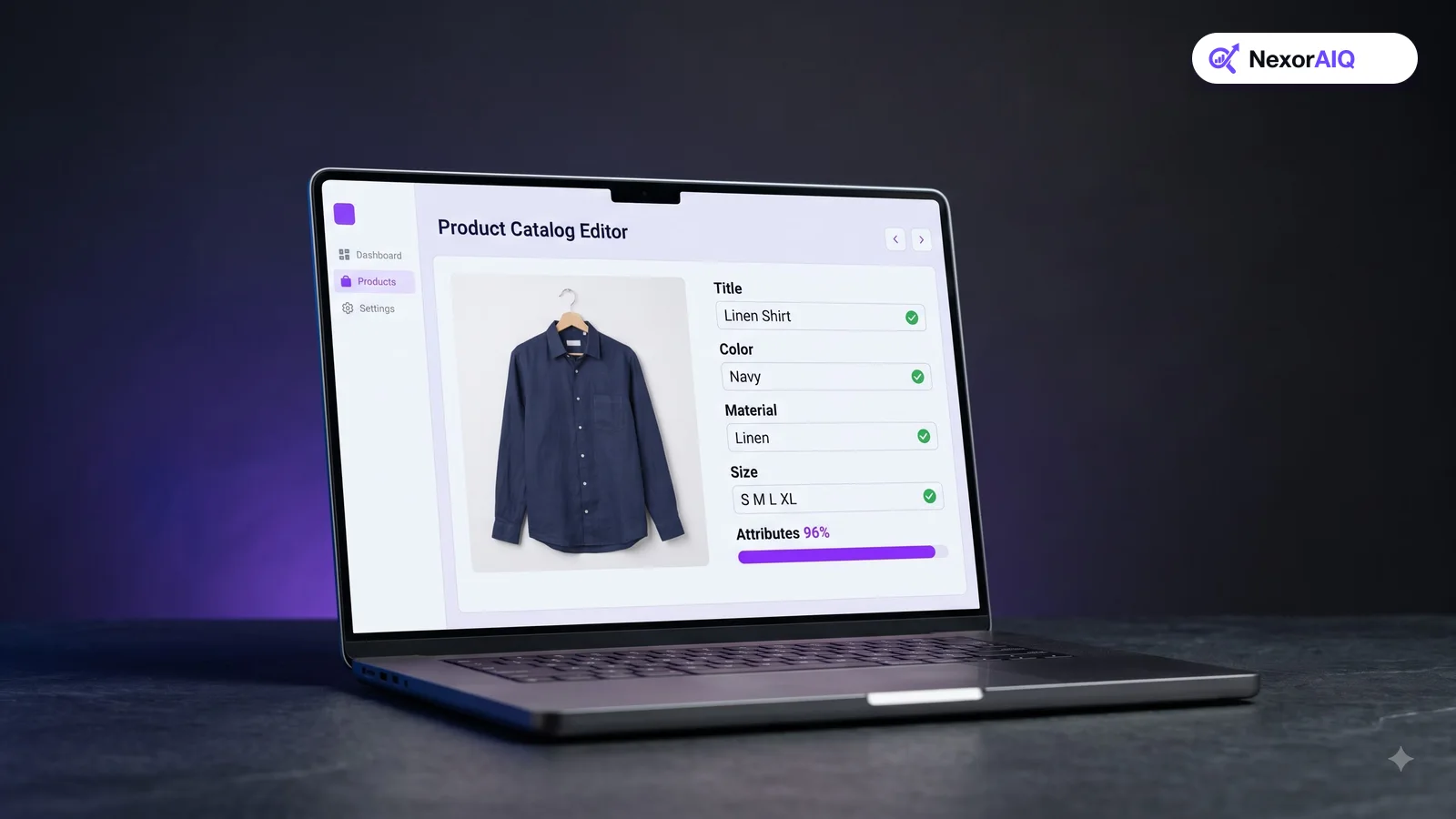
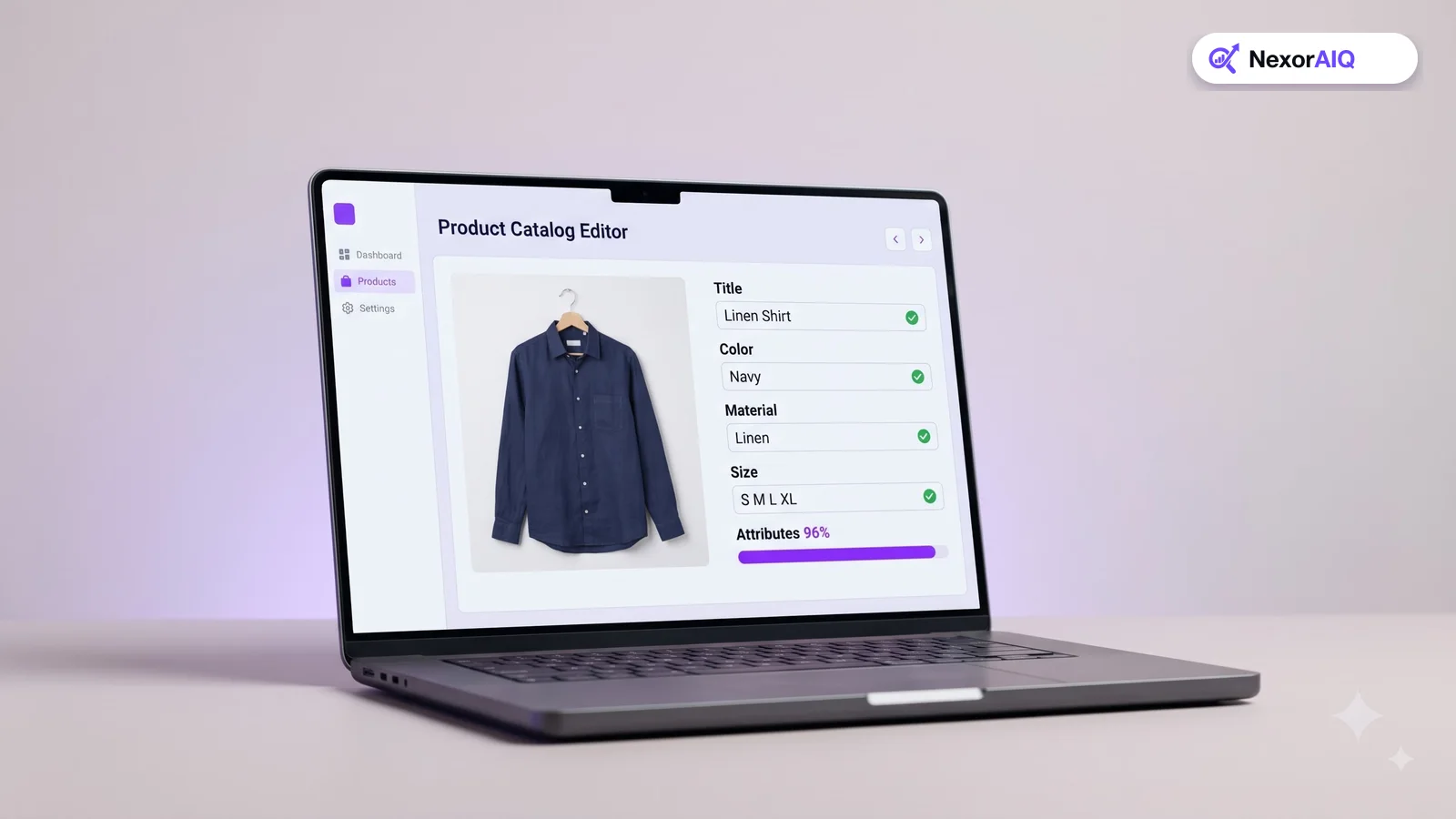
NexorAIQ's catalog enrichment uses AI to fill missing attributes from your existing text and images, and its AI vector search still finds products when the shopper's words and your catalog's words differ. Clean attributes then power dynamic filters automatically.
NexorAIQ is available now for Magento 2 and Adobe Commerce.
Product data checklist for search
| Field | Why search needs it | Target |
|---|---|---|
| Title with product type | Strongest matching signal | 100% of products |
| Brand | Brand queries and filters | 100% |
| Color, material, size | Attribute queries and filters | 95%+ in relevant categories |
| Key specs | Technical and compatibility queries | 95%+ for technical products |
| Use case / occasion | Thematic and problem queries | 80%+ |
| Stock and price | Ranking and filtering | Always current |
Frequently Asked Questions & Architecture Insights
How does product data affect site search?
Search engines can only match and filter on information stored in product records. Missing or inconsistent titles and attributes mean products don't appear for the words shoppers use, and filters return incomplete results.
Which product attributes are most important for search?
Product type, brand, color, material, size, key specifications and use case. Check your search log to see which attributes your shoppers type most often.
Can AI fix missing product attributes?
AI can extract attributes from descriptions and images and suggest missing values, which speeds up enrichment a lot. Review samples before publishing, especially for safety or legal attributes.
What is a good attribute fill rate?
Aim for at least 95% on attributes used as filters in a category, and 100% on product type and brand.
Key Takeaway
Search quality starts in the catalog. Audit the attributes shoppers search and filter by, write titles that name the product type, normalize values, and use AI to fill gaps with human review. Then make complete data a requirement for every new product, so the improvement lasts.