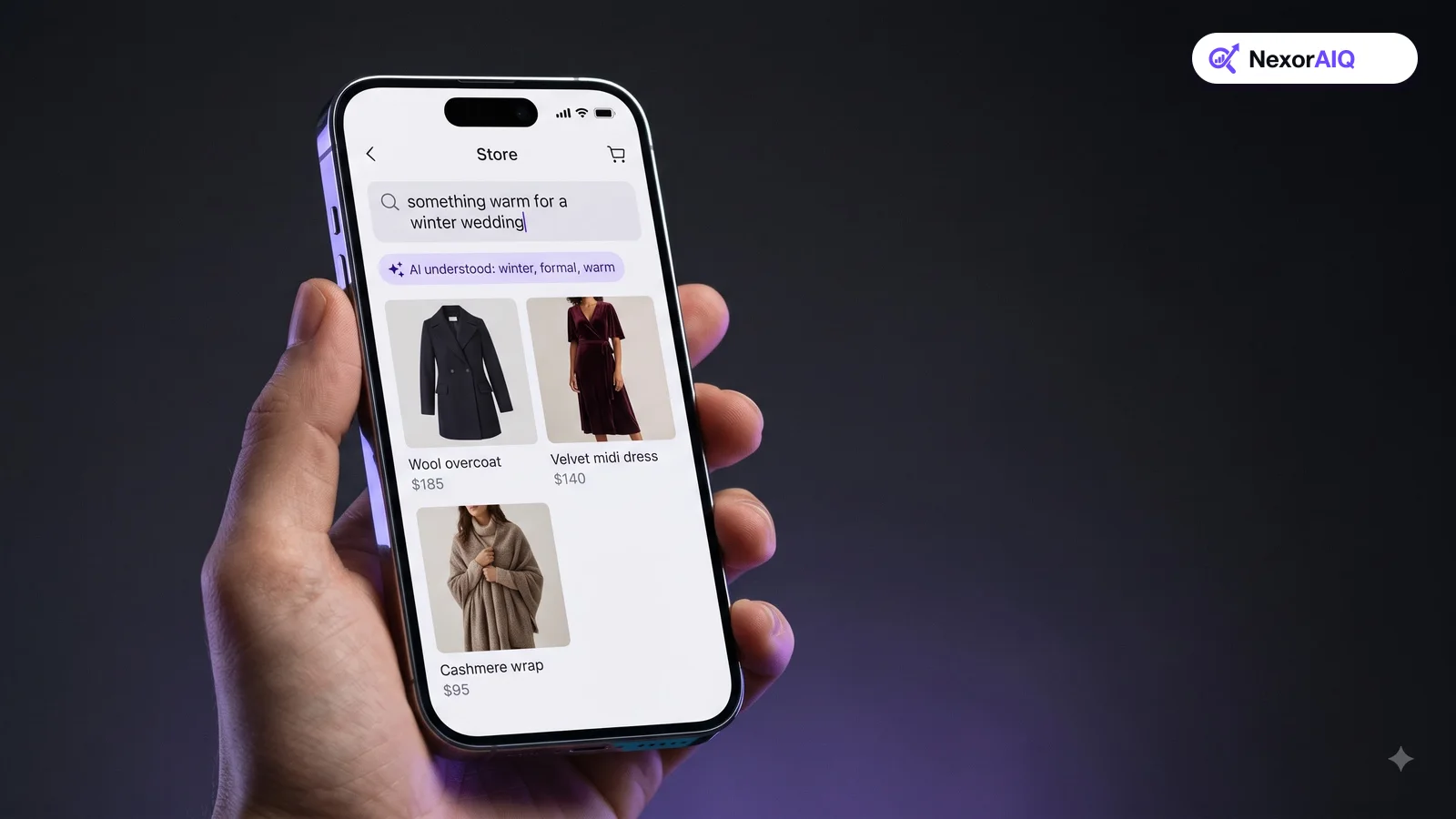
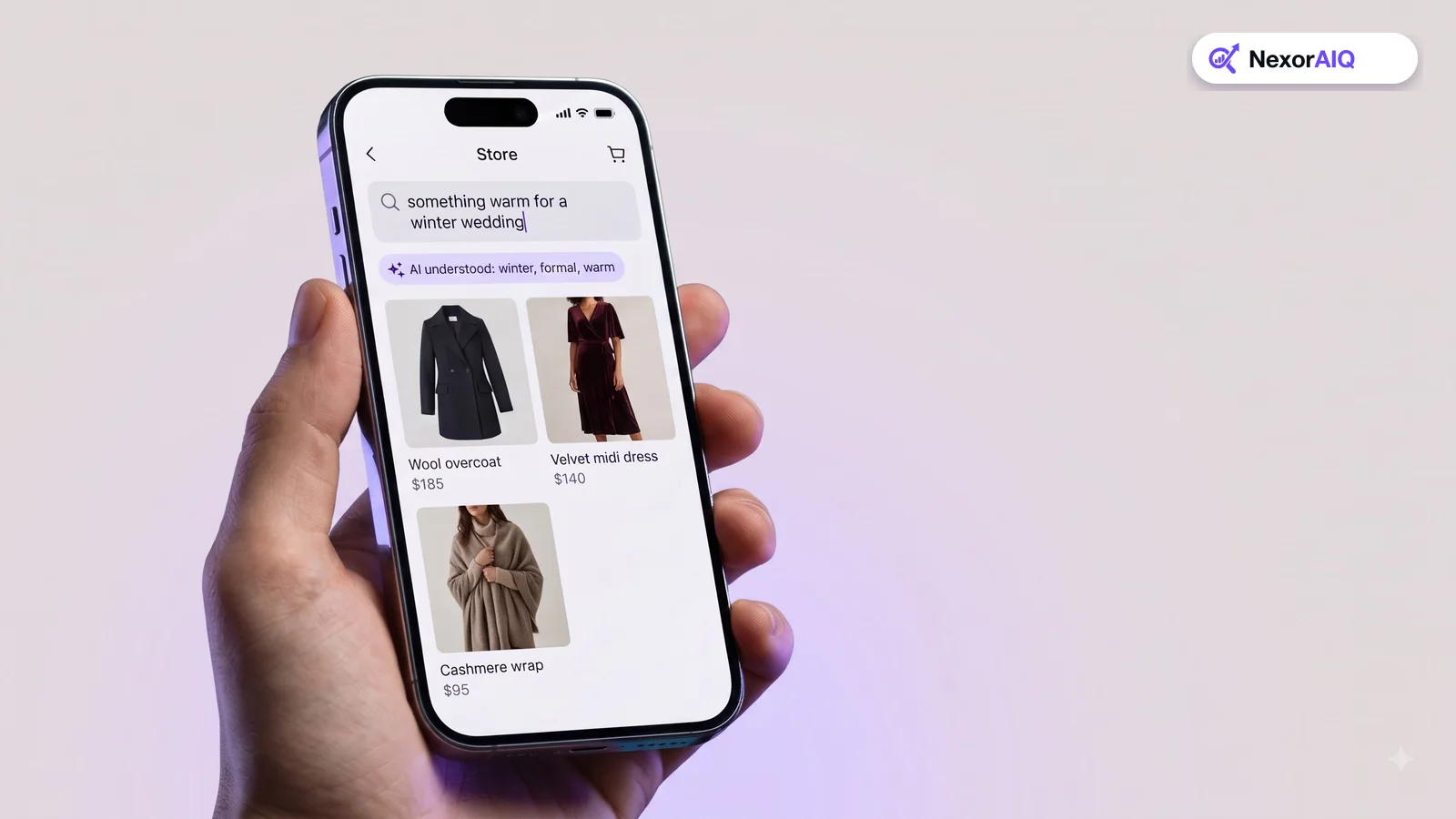
A shopper types "something warm for a winter wedding". A keyword engine looks for products containing those exact words and finds nothing. An AI product search engine understands the shopper wants formal winter wear, such as wool coats, velvet dresses and wraps, and shows them. That difference is the whole idea. This article explains how AI product search works in plain terms, what it can and can't do, and how to tell whether your store needs it.
AI product search in one sentence
AI product search uses machine learning to understand the meaning of a shopper's query and match it to products, even when the words don't match exactly.
Traditional keyword search asks: "Which products contain these words?" AI search asks: "Which products is this shopper looking for?" The second question is harder, but it's the one that matters for sales.
How it works: four building blocks
Most AI product search engines combine four techniques.
- Embeddings (semantic understanding). A language model turns every product and every query into a list of numbers that represents its meaning. Products with similar meanings sit close together, so "sofa" and "couch" match even though they share no letters.
- Hybrid retrieval. Meaning alone isn't enough. A shopper searching for "ZX-450" wants that exact model, not something similar. Good engines run keyword and semantic retrieval side by side and blend the results. We cover this in detail in vector search vs keyword search.
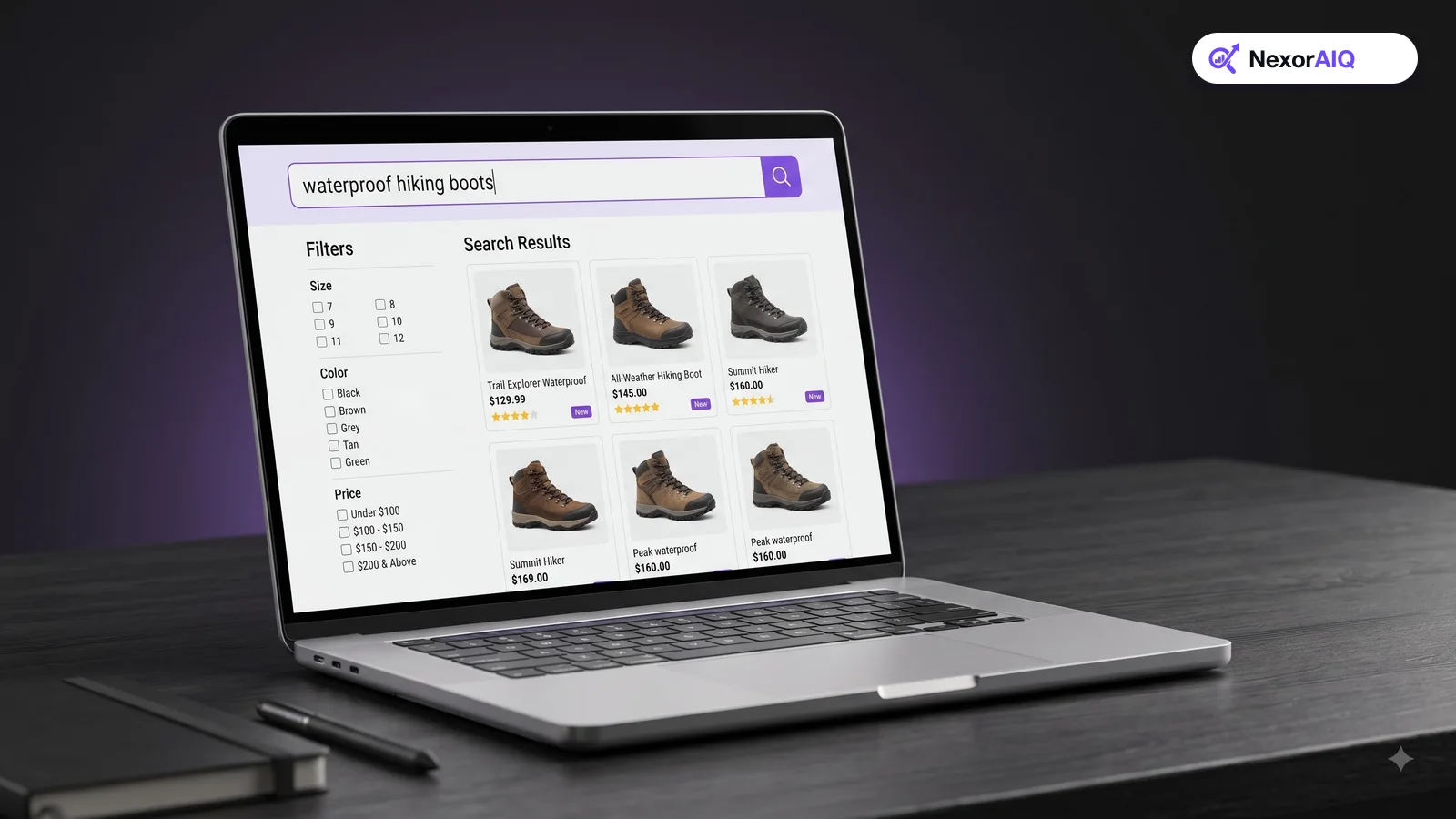
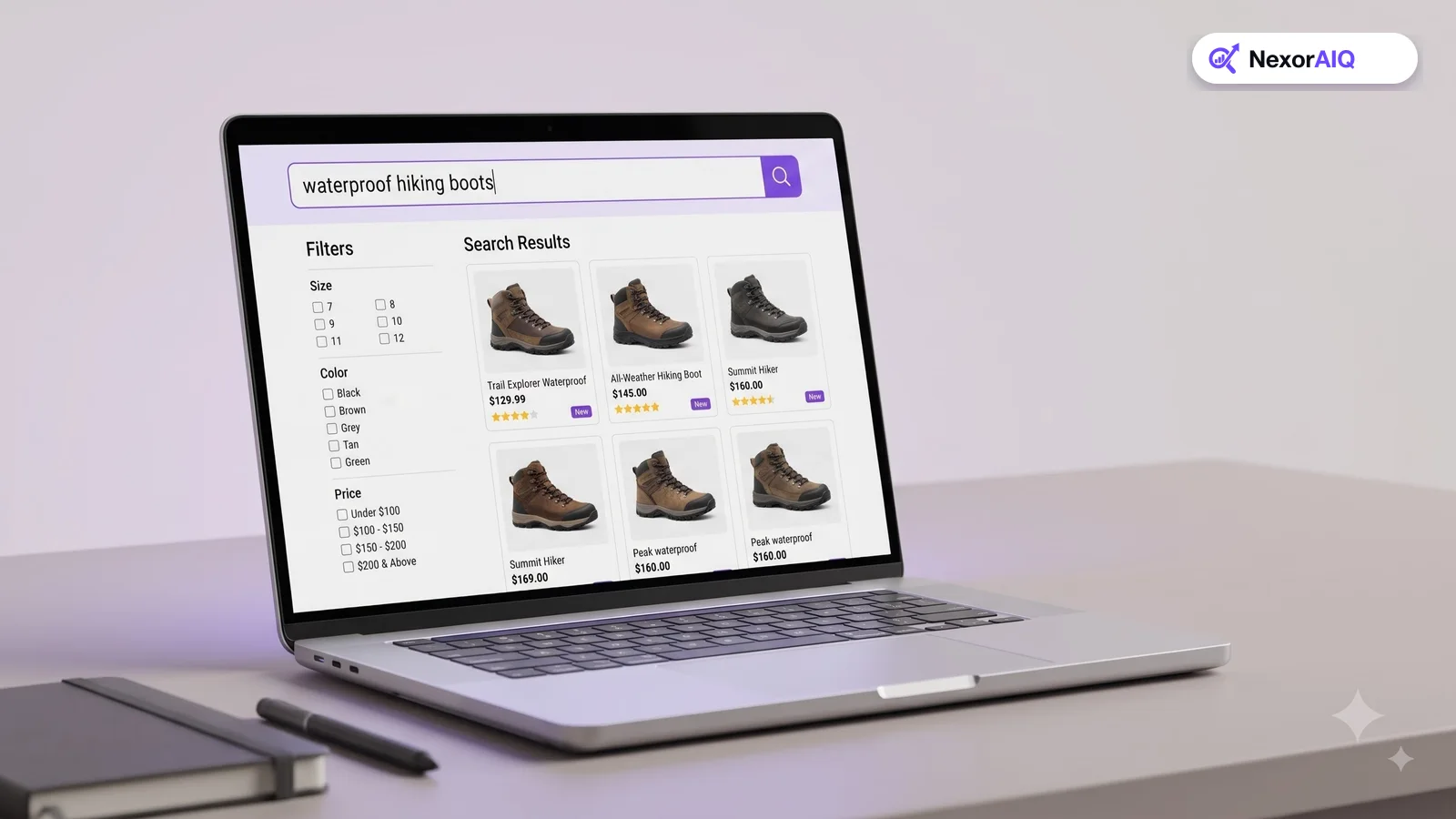
- Query understanding. The engine pulls structured intent out of the text. In "red running shoes under $80", it detects a color, a product type and a price limit, and applies them as filters instead of hoping the words appear in a description.
- Learning from behavior. Clicks, add-to-carts and purchases show which results satisfy shoppers. Over time, ranking leans toward products that people actually choose for each query.
What AI search does better than keyword search
- Synonyms without manual lists. "Trainers", "sneakers" and "running shoes" match automatically, though you'll still want a search dictionary for brand terms and store-specific slang.
- Descriptive and natural-language queries. "Dress for a summer garden party" or "gift for a coffee lover" return sensible products.
- Fewer dead ends. Because results don't depend on exact words, far fewer searches return nothing. Across NexorAIQ deployments we see 94% fewer zero-result searches.
- Long-tail queries. The rare, specific queries that make up a large share of total searches get useful results instead of empty pages.
What AI search can't fix on its own
AI search is powerful, but it isn't magic. Be realistic about three limits.
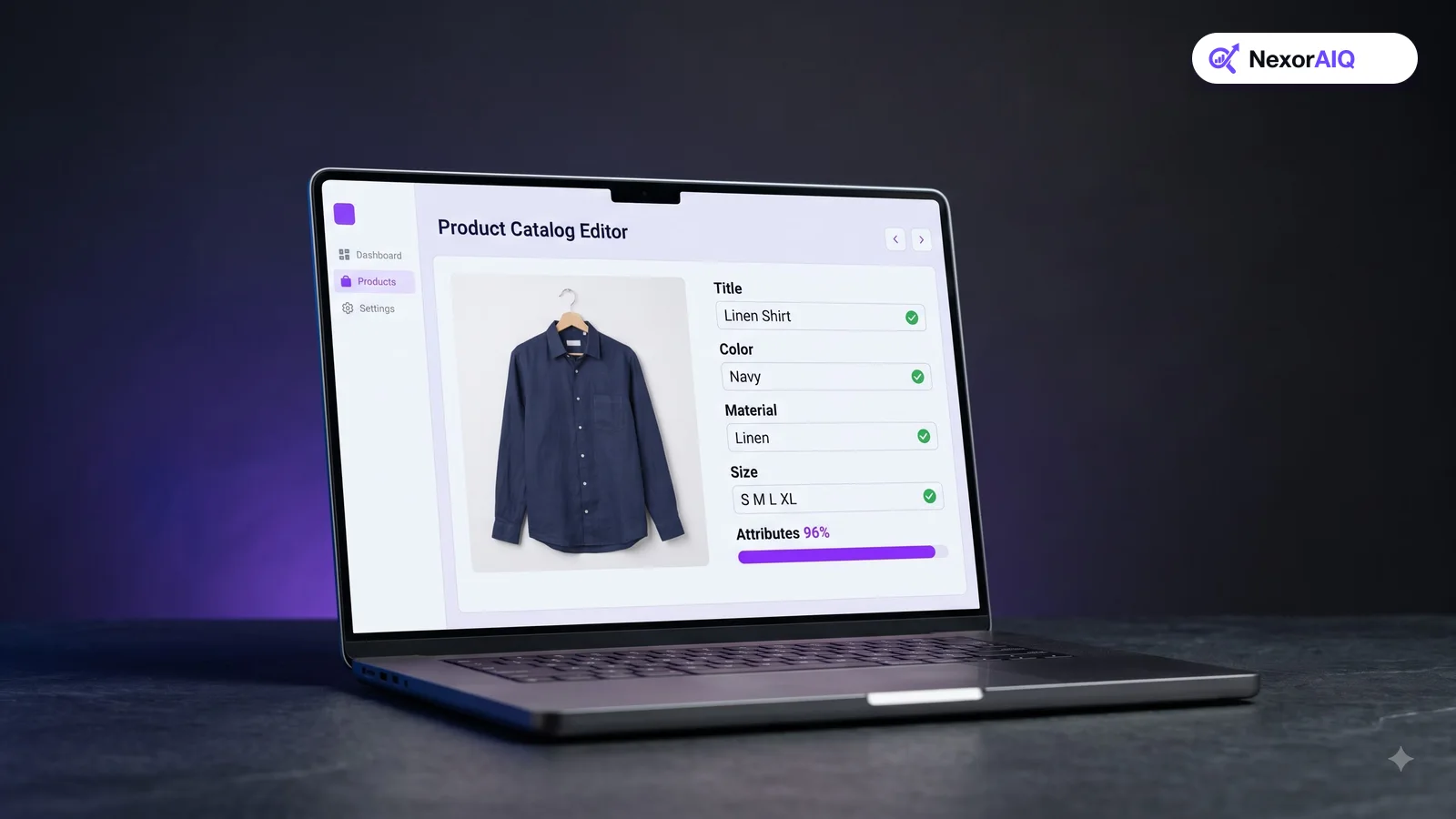
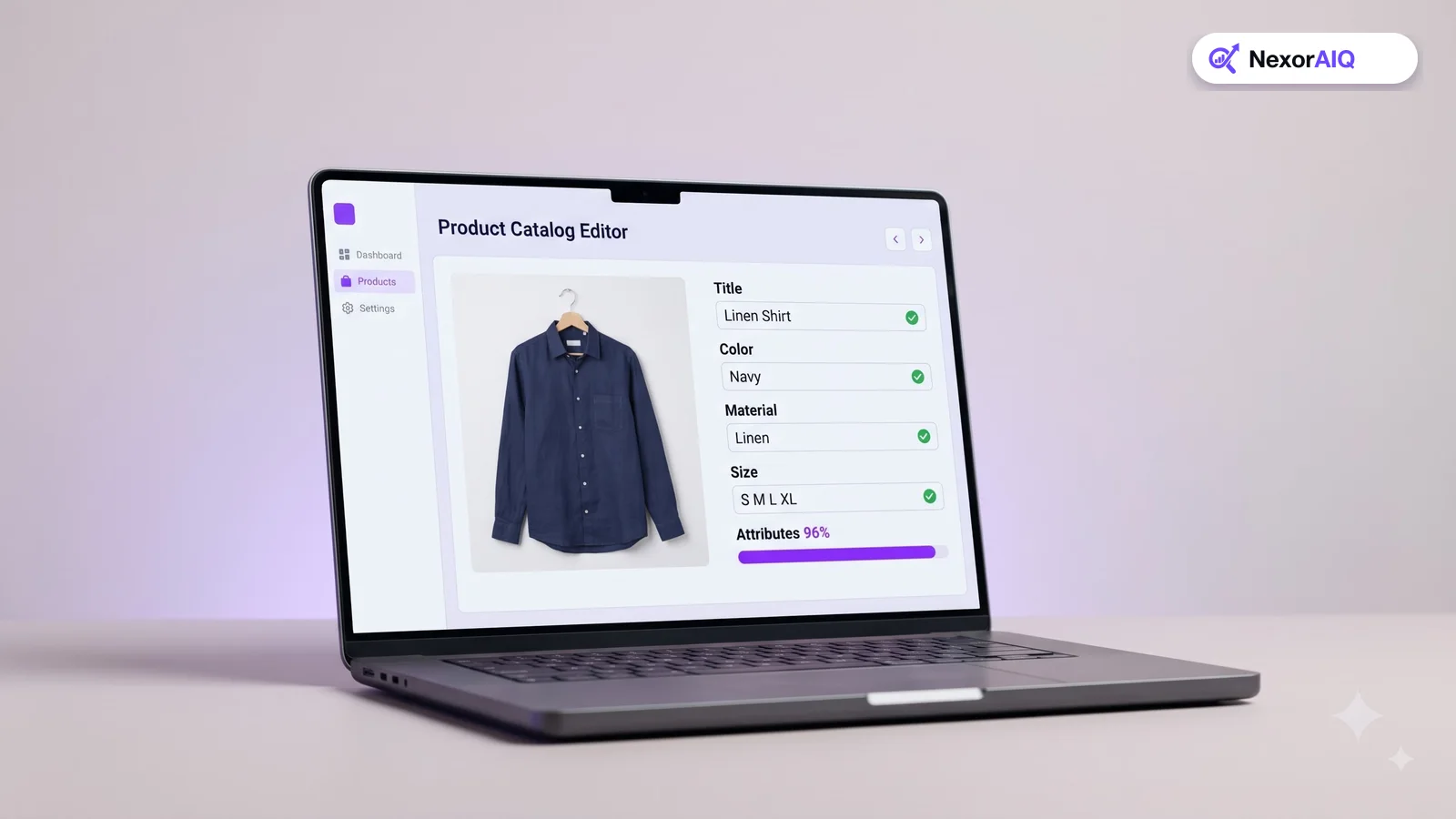
- Poor product data. If your titles say "Item 4471" and your attributes are empty, no model can tell a wool coat from a rain jacket. Clean titles, categories and attributes still matter most. Catalog enrichment can help fill gaps.
- Business goals. AI can learn what shoppers click, but it doesn't know your margins, stock plans or launch calendar. You still need merchandising rules for that.
- Exact lookups. Pure semantic search can blur model numbers and part codes. That's why hybrid retrieval matters, especially for B2B catalogs.
Signs your store is ready for AI product search
You'll get the most from AI search if several of these are true:
- More than 5% of your searches return zero results.
- Shoppers often type descriptive phrases, not just product names.
- Your catalog has thousands of products across many categories.
- You keep adding synonyms by hand and never catch up.
- Search users convert no better than browsers, which suggests search isn't helping them.
- You sell in more than one language or region.
If your catalog is small and shoppers mostly search by exact product name, a well-tuned keyword engine may be enough for now.
How to evaluate an AI search engine
Don't judge an engine on a demo catalog. Test it on yours.
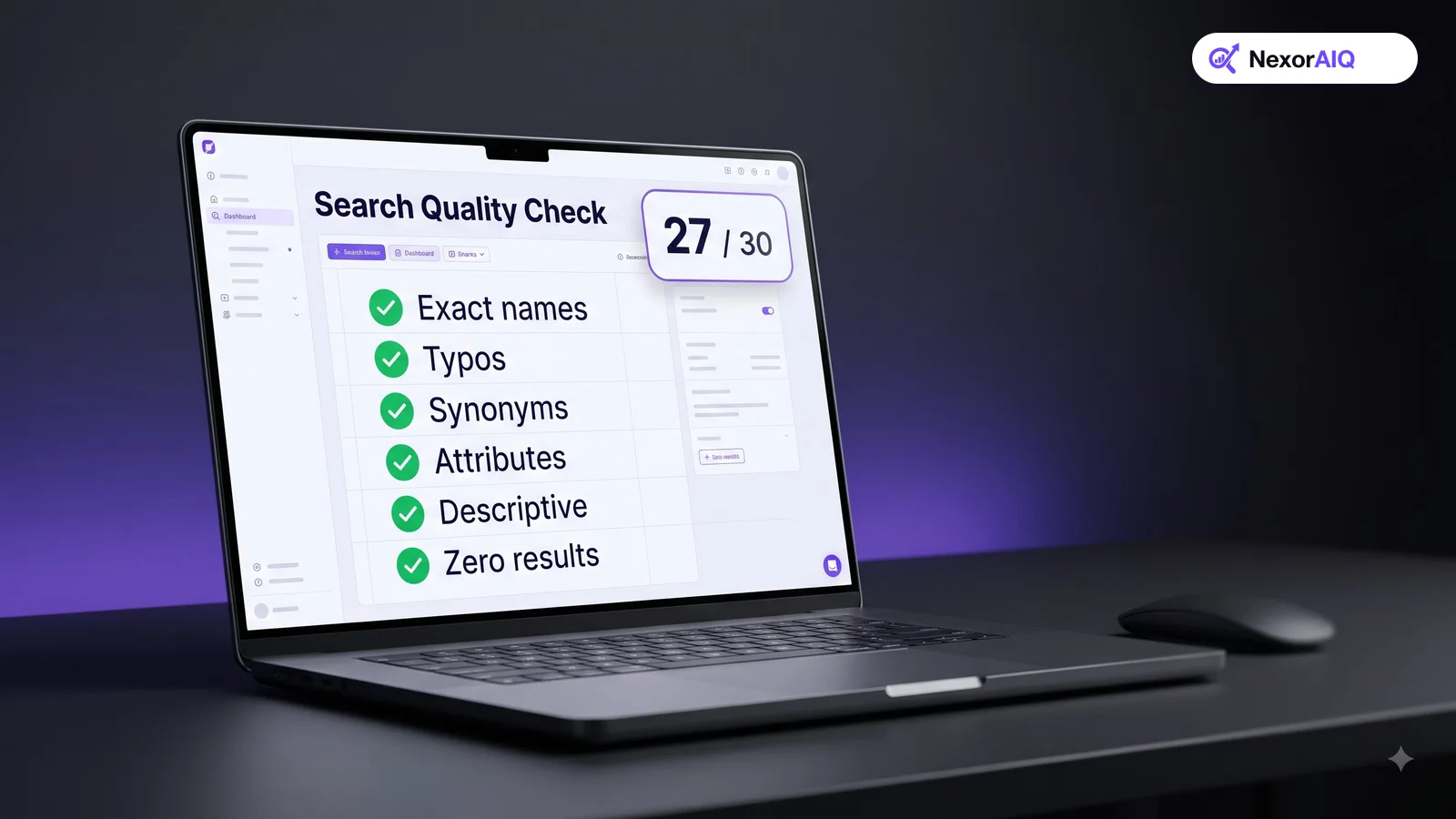
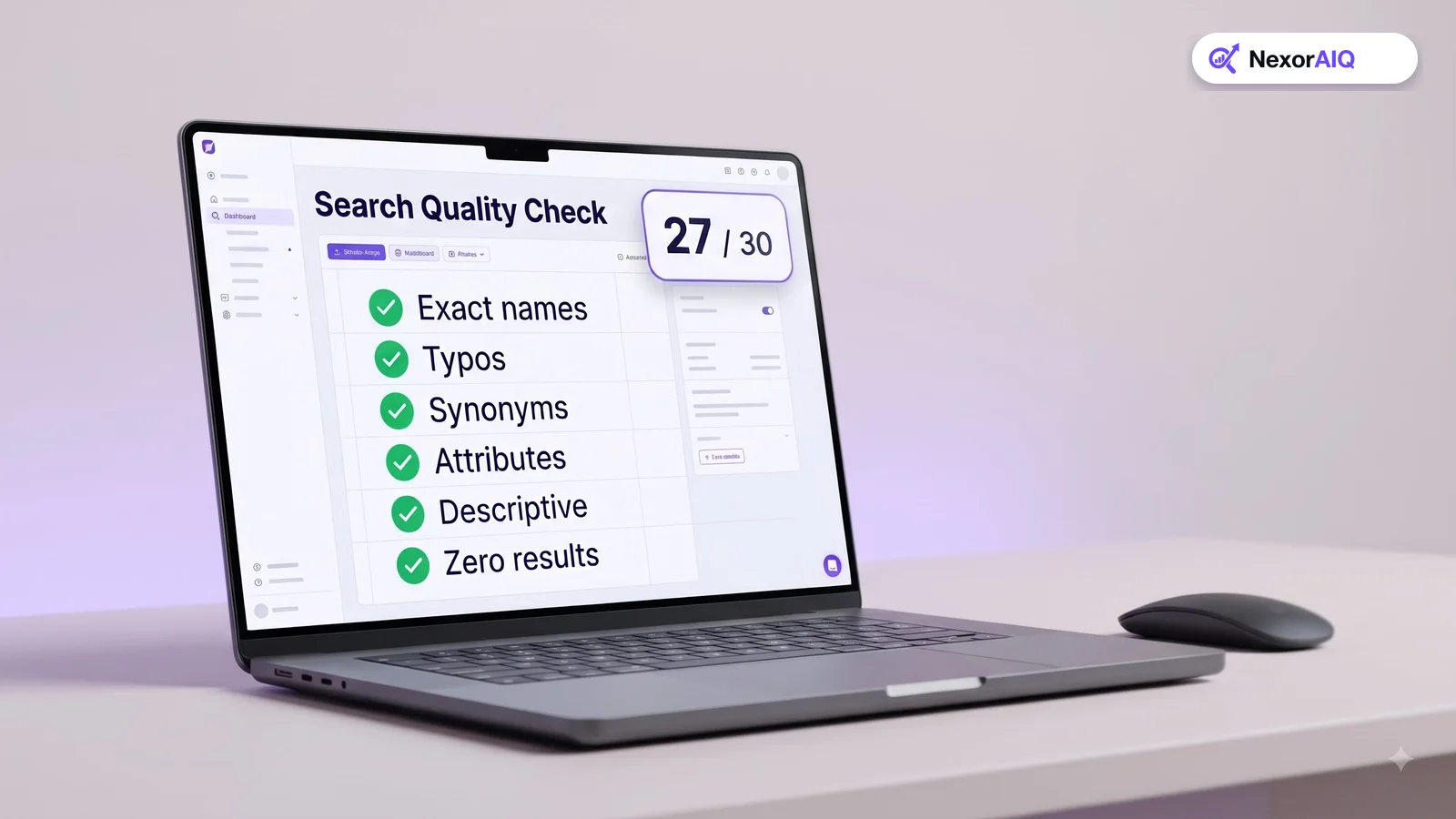
- Build a test set. Take 100 real queries from your logs: top queries, zero-result queries, misspellings, SKUs and descriptive phrases.
- Score the first page. For each query, note whether the top 5 results are relevant. Compare against your current search.
- Check exact matches. Every SKU and model number should return the exact product first.
- Check speed. Search should feel instant. Measure response times on mobile, not just on office Wi-Fi.
- Check control. Make sure your team can pin, boost and bury products without a developer.
- Run an A/B test. The final judge is revenue per search on live traffic.
How NexorAIQ approaches AI product search
NexorAIQ runs hybrid vector and keyword retrieval, detects attributes in queries, handles typos and synonyms, and lets merchandisers layer rules on top. In our production data, 95% of searches return in under 25 ms, so AI understanding doesn't cost shoppers speed.
NexorAIQ is available now for Magento 2 and Adobe Commerce, with other platforms coming soon. You can book a demo to test it on your own catalog.
Keyword search vs AI product search
| Situation | Keyword search | AI (hybrid) search |
|---|---|---|
| "couch" when products say "sofa" | No match unless a synonym is added | Matches by meaning |
| "ZX-450" model number | Exact match | Exact match (keyword side of hybrid) |
| "red shoes under $80" | Looks for the words in text | Applies color, type and price as filters |
| "gift for a coffee lover" | Usually zero results | Shows grinders, mugs, beans |
| Misspelling "sweter" | Depends on typo rules | Corrected automatically |
Frequently Asked Questions & Architecture Insights
What is AI product search?
AI product search uses machine learning to understand the meaning of a shopper's query and match it to relevant products, even when the query and product text use different words.
Is AI product search the same as semantic search?
Semantic search is one part of it. Most AI product search engines combine semantic matching with keyword matching, query understanding and learning from shopper behavior.
Does AI search replace merchandising?
No. AI improves relevance, but your team still sets business priorities such as launches, margins and stock. The best results come from AI relevance plus merchandising rules.
How do I measure whether AI search is working?
Track zero-result rate, search conversion rate and revenue per search before and after the change, ideally with an A/B test on live traffic.
Key Takeaway
AI product search matches what shoppers mean, not just what they type. It works best on top of clean product data, combined with exact keyword matching and your team's merchandising rules. If many of your searches fail or shoppers type in natural language, it's likely your biggest search upgrade.