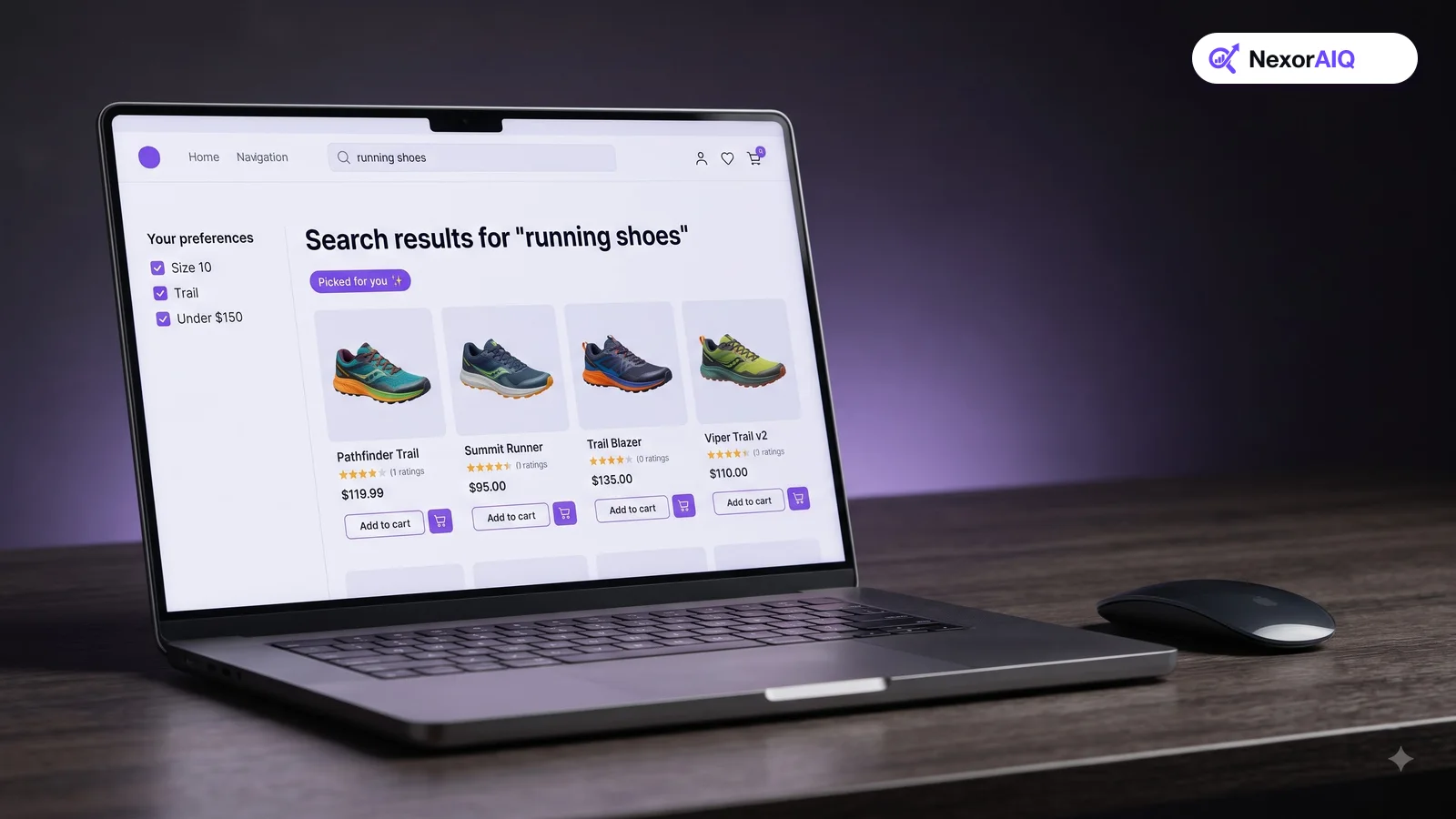
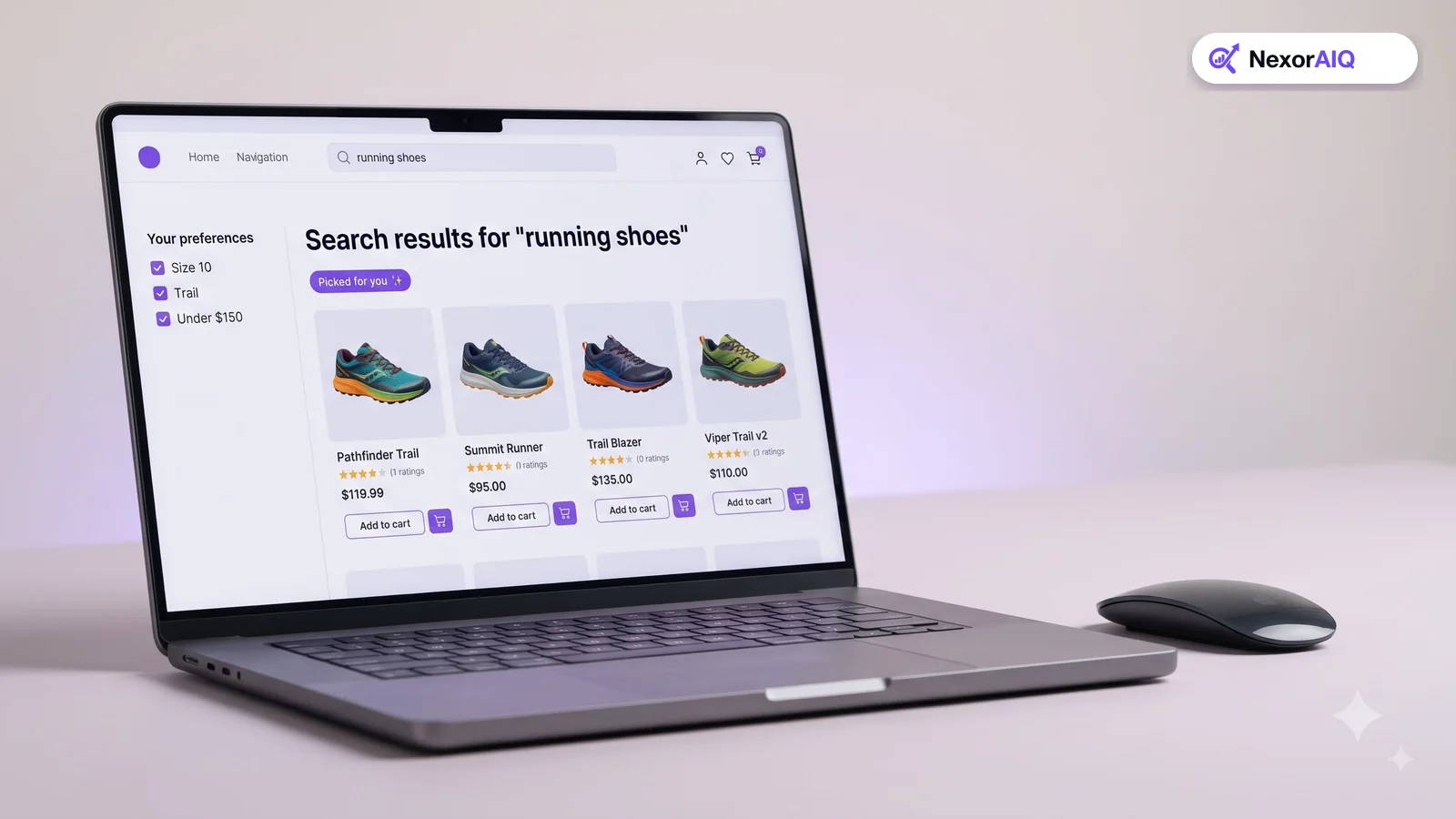
Two shoppers type "running shoes" into the same store. One has bought trail gear three times this year. The other has only ever browsed women's road running. Showing them the same results is a missed opportunity for both. Personalized search re-orders matching products based on what the store knows about each shopper. Done well, it makes search feel effortless. Done badly, it traps shoppers in a narrow bubble or feels intrusive. This guide explains how personalized search works and how to roll it out safely.
Why personalization matters for search
Shoppers now expect stores to recognize them. McKinsey's research found that 71% of consumers expect companies to deliver personalized interactions, and 76% get frustrated when that doesn't happen. The same research found that personalization most often drives a 10 to 15% revenue lift, with company-specific results ranging from 5 to 25%.
Search is a natural place to start, because the shopper has already said what they want. Personalization doesn't change which products match the query. It changes their order, so the products this shopper is most likely to want appear first.
How personalized search works
Personalized search runs in two stages:
- Retrieval stays the same for everyone. The engine finds all products that match "running shoes", using keyword and semantic matching.
- Re-ranking uses shopper signals. Among those products, items that fit this shopper's preferences get a boost: a preferred brand, a usual size, a price range, a gender or style they browse.
This order matters. Personalization should never add products that don't match the query or remove products that do. It only nudges the order. Our AI product search guide explains the retrieval stage in more detail.
The signals worth using
Not every signal is equally useful. Start with the strong, low-risk ones:
- Session behavior: what the shopper clicked, viewed and added to cart in this visit. It works even for first-time visitors and reflects current intent.
- Purchase history: brands, categories and sizes bought before.
- Preferences shown through filters: if a shopper always filters to size M or under $50, use that as a soft preference.
- Context: device, location for shipping and availability, and season.
Use sensitive inferences carefully or not at all. Guessing personal characteristics from browsing can feel invasive, and it is regulated in many regions.
Where personalized search goes wrong
- The filter bubble. A shopper who bought one blue shirt now sees only blue shirts. Limit how strongly any single signal can boost, and always keep some variety in the top results.
- Stale signals. Someone who bought a crib two years ago probably doesn't want cribs now. Let older signals fade over time.
- Gift purchases. One gift for a child shouldn't turn a shopper's results into children's products. Give one-off purchases less weight than repeated behavior.
- Over-personalizing exact queries. If someone types a specific product name or SKU, show that product first. Personalization is most useful for broad queries such as "dress" or "headphones".
- Lost trust. Twilio Segment's 2023 research found only 41% of consumers are comfortable with AI being used to personalize their experiences. Be clear about what you use, and let shoppers reset or turn off personalization.
Start with anonymous, session-based personalization
You don't need logged-in profiles to begin. Most visitors aren't logged in, and session behavior is often the strongest signal of current intent.
- If a shopper views three trail shoes, boost trail shoes for their next broad search.
- If they filter to a price range, carry it forward softly.
- If they add a laptop to cart, boost compatible accessories in related searches.
Session personalization carries little privacy risk, works from the first visit, and gives you a clear test before you invest in long-term profiles.
Measure it with an A/B test
Personalization is easy to believe in and easy to get wrong, so test it properly. Split traffic between personalized and standard ranking and compare:
- Search conversion rate and revenue per search
- Click-through on the first row of results
- Search refinement rate (how often shoppers re-type the query)
- Diversity of products clicked and bought
Track results by segment: new versus returning shoppers, mobile versus desktop. Personalization often helps returning shoppers a lot and new shoppers only a little. Our search analytics guide covers the formulas.
Where NexorAIQ fits
NexorAIQ re-ranks results using session behavior and shopper context on top of strong keyword and AI vector search relevance, with caps that keep results varied. AI recommendations use the same signals on product and cart pages, and merchandisers keep control with search rules and boosts.
NexorAIQ is available now for Magento 2 and Adobe Commerce.
Personalization signals compared
| Signal | Strength | Privacy risk | Best for |
|---|---|---|---|
| Current session clicks and cart | High | Low | All visitors, broad queries |
| Purchase history | High | Medium | Returning customers |
| Filter habits (size, price) | Medium | Low | Fashion, footwear, price-sensitive shoppers |
| Location and season | Medium | Low | Availability, weather-related products |
| Inferred personal traits | Uncertain | High | Avoid unless explicitly provided |
Frequently Asked Questions & Architecture Insights
What is personalized search in ecommerce?
Personalized search re-orders the products that match a query based on what the store knows about the shopper, such as their current session, past purchases and preferred sizes or brands.
Does personalized search change which products appear?
It shouldn't. Well-designed personalized search keeps the same matching products and only changes their order, so shoppers still see every relevant option.
Can you personalize search for visitors who aren't logged in?
Yes. Session behavior, such as products viewed, filters used and items added to cart, is a strong signal of current intent and works from the first visit.
How much revenue can personalization add?
McKinsey's research found personalization most often drives a 10 to 15% revenue lift, with results between 5 and 25% depending on the company and how well it is executed.
Key Takeaway
Personalized search works when it nudges, not when it decides. Keep retrieval the same for everyone, re-rank with strong, low-risk signals, cap every boost, and start with session behavior before building long-term profiles. Then prove the gain with an A/B test before rolling it out to everyone.